Yes, it's easy to look on the dark side of the recent Supreme Court decisions allowing corporations to claim religious convictions and attendant relief from legal obligations. One can suspect that it's part of a progression toward full citizenship and voting rights for paper entities and perhaps even a superior status to the individual. If Subaru can claim that it builds cars with love, and a retail store chain to have religious scruples, then of course a corporation must be not only fully human in its own right, but an American citizen. More than an American citizen: a citizen not bound by the results of free elections to which we living breathing citizens are obliged to acquiesce.
Can't we see a bright side? Perhaps now that a paper and ink 'person' can avoid obligations for religious reasons, a flesh and blood person can be forgiven for not reciting what constitutes a religious oath every morning and some evenings. If a corporate store owner can refuse to provide insurance to pay for blood transfusions or vaccinations or indeed medical care of any kind if it files an affidavit stating such things to be a grave moral wrong, how then do I not have the right to a line item veto over my tax obligation? There's a light at the end of this long, dark tunnel and it's the light of anarchy. Libertarians rejoice, we don't have to do anything we don't want to do.
It's not that the courts haven't made exceptions for individual moral and religious convictions in our history. Churches and Synagogues were allowed to use sacramental wine during Prohibition and conscience was allowed as an exemption from the draft, so long as one could document membership in an appropriate group. We have long given preference to group-think over individual conviction and the sun shines on little that is new.
Cynicism aside, do not the three recent decisions suggest that the problem hinges on the fact that we expect employers to pay directly for benefits to employees rather than to do as we do with Medicare: take it out of their paychecks? Were we to pay for health care out of general revenue dissidents would have to claim the right to set their own tax obligations outside of Democratic processes, making the shortcomings of radical Libertarianism somewhat more apparent. A single payer system would not overly burden certain employers and would not punish those out of work. It would make organized sexual perversion less able to persist by calling itself Christianity while stepping on our lives. It's time.
Showing posts with label libertarianism. Show all posts
Showing posts with label libertarianism. Show all posts
Saturday, July 05, 2014


Tuesday, November 08, 2011
Elective Dictatorship or Leadership?
Ron Paul, I like you - I really do. I like it when you denounce our military adventurism and imperial urges. I share your distaste for prosecuting harmless, consensual acts and I don't think either of us like having a government dictate morality according to some chosen religious standards.
I couldn't agree more that we need to keep the governmental nose out of our personal choices that don't infringe on other people's rights. I think we have an inherent right to be left alone too, but when you assert that that same government can force a woman to continue a pregnancy I find it inconsistent. When you proclaim that President Obama is overstepping his presidential powers by taking action to end a dangerous drug shortage, I'm confused. I'm disappointed. Market forces alone aren't going to induce drug companies to make unprofitable products that some people need to stay alive and if they eventually do, it won't be soon enough for someone's mother or sister or child. There are times when the the noli me tangere market approach does not serve the public interest and times when human life is more important than the sanctity of inflexible doctrine.
Yes, I agree that our government was designed to move slowly, for inaction to be the default action as you said yesterday. I even agree that there is an invisible hand in the market, but I cannot understand how you can ignore the sometimes dire consequences of such slow moving or inert systems in a world that moves at a rate inconceivable in 1789.
Sure, eventually drug shortages will tend to rectify because of market forces. 'Tend to' and 'eventually' are expensive words however and the price is often paid in death and suffering. A car tends to steer itself in a straight line, but you know, sometimes someone has to grab the wheel if staying alive is a consideration.
I have to ask you how much needless death and suffering are you willing to force us all to endure to gild the vision of a withered and minimal state where things move only by themselves and the making of money is the only test of righteousness?
Dictatorship? Seriously? Isn't that a bit like calling the guy who pulls your kid out of a well a kidnapper because he didn't apply to Congress in advance through proper channels?
I believe in Democracy as much as you do and perhaps more. I mistrust radical change and I lean toward Libertarianism in many things, but unlike you, I do not belief in faith over fact. If there is a plague, if a dam breaks -- if that asteroid that passed close to us this morning had landed in Texas, I want someone to grab the steering wheel without having his hands tied by doctrines soaked in the tea of Utopian visions.
I have to ask "why now?" Were you as firm in protest of our previous president's extra-legal activities? The signing statements, the treaty breaking, the torture, the illegal search and seizure and surveillance? The wars that have killed hundreds of thousands, destroyed millions of lives and wasted trillions of dollars? Of course you didn't approve and neither did I, but there is a difference between an asteroid and a sand grain. Are we really confusing necessary course corrections with wanton disrespect for law, due process and freedom?
Why now? Or are you just jumping on the Obama Bashing Band Wagon because you're more of a loyal Republican and less interested in doing what needs to be done before too many people die than you'd like to admit?
I couldn't agree more that we need to keep the governmental nose out of our personal choices that don't infringe on other people's rights. I think we have an inherent right to be left alone too, but when you assert that that same government can force a woman to continue a pregnancy I find it inconsistent. When you proclaim that President Obama is overstepping his presidential powers by taking action to end a dangerous drug shortage, I'm confused. I'm disappointed. Market forces alone aren't going to induce drug companies to make unprofitable products that some people need to stay alive and if they eventually do, it won't be soon enough for someone's mother or sister or child. There are times when the the noli me tangere market approach does not serve the public interest and times when human life is more important than the sanctity of inflexible doctrine.
Yes, I agree that our government was designed to move slowly, for inaction to be the default action as you said yesterday. I even agree that there is an invisible hand in the market, but I cannot understand how you can ignore the sometimes dire consequences of such slow moving or inert systems in a world that moves at a rate inconceivable in 1789.
Sure, eventually drug shortages will tend to rectify because of market forces. 'Tend to' and 'eventually' are expensive words however and the price is often paid in death and suffering. A car tends to steer itself in a straight line, but you know, sometimes someone has to grab the wheel if staying alive is a consideration.
I have to ask you how much needless death and suffering are you willing to force us all to endure to gild the vision of a withered and minimal state where things move only by themselves and the making of money is the only test of righteousness?
Dictatorship? Seriously? Isn't that a bit like calling the guy who pulls your kid out of a well a kidnapper because he didn't apply to Congress in advance through proper channels?
I believe in Democracy as much as you do and perhaps more. I mistrust radical change and I lean toward Libertarianism in many things, but unlike you, I do not belief in faith over fact. If there is a plague, if a dam breaks -- if that asteroid that passed close to us this morning had landed in Texas, I want someone to grab the steering wheel without having his hands tied by doctrines soaked in the tea of Utopian visions.
I have to ask "why now?" Were you as firm in protest of our previous president's extra-legal activities? The signing statements, the treaty breaking, the torture, the illegal search and seizure and surveillance? The wars that have killed hundreds of thousands, destroyed millions of lives and wasted trillions of dollars? Of course you didn't approve and neither did I, but there is a difference between an asteroid and a sand grain. Are we really confusing necessary course corrections with wanton disrespect for law, due process and freedom?
Why now? Or are you just jumping on the Obama Bashing Band Wagon because you're more of a loyal Republican and less interested in doing what needs to be done before too many people die than you'd like to admit?
Wednesday, August 17, 2011
Fantasy Islands
There have been a number of great social experiments since the founding of the United States of America as a secular republic whose legitimacy arose from the consent of the governed rather than the approval of some leader presuming to speak for God. It's too soon to know if it's been entirely successful.
If the Ayn Rand style social experiment envisioned by young venture capitalist Peter Thiel ever gets off the ground, or more accurately if it floats, since it's to be conducted on an artificial island, we may get a more definitive answer in a much shorter period of time, or so I suspect. Thiel, the fellow who helped found Paypal and Facebook, would like to construct a series of floating city-states in the Pacific where the 'principles' of Ms. Rand would be tested. They would somehow be established along "strict libertarian lines with a minimalist government free from the regulation, laws, and moral suasion of any landlocked country" says Details Magazine.
How a technology-intensive creation such as a floating city could be built without rules puzzles me since the builders and owners would in essence be the government and a government responsible only to its investors like Thiel and Patri Friedman, ultra-Libertarian grandson of economist Milton Friedman and the brains behind the idea. What sounds Libertarian on the drawing board may be corporatocracy at sea -- or perhaps just a bunch of little boys whose adulthood has been stunted by their massive wealth, playing Peter Pan. I have to wonder which one is Wendy.
And of course, the islanders wouldn't be randomly selected from the teeming masses real America is composed of, if I'm guessing correctly, so perhaps the Island of Randtopian Objectivist Dreams wouldn't have to deal with the real world's most intractable problems nor would any lessons learned about the value of living without the burden of altruistic responsibility be worth the effort. Think of a Petrie dish with a Plague bacteria culture. One might never know the dangers it presents since the vectors that spread it aren't present as it sits there peacefully digesting its agar.
Our country has long been home to many social experiments, some of which have withered away either by banning reproduction or lack of further interest by the participants. Some have gradually turned from the founding principles and melted into the larger American pot. Some are alive and growing, even if slowly changing. But a few thousand rich and aggressive millionaires on an oil rig without "government intrusion" forcing them to treat others in the way they'd like to be treated might be an interesting experiment, but what would the results actually mean in terms of conducting that kind of experiment outside the Petrie dish: in a nation of 300,000,000 rich, poor, healthy, sick, young, old smart, stupid, people with varying degrees of neurosis? Would the experiment mean anything at all if everyone there were so wealthy that the normal concerns and normal needs of normal people never manifest themselves?
Beats me, but this is an experiment proposed by young billionaires full of enthusiasm and self-esteem or should I say, overweening egotism. The real problems of real lif
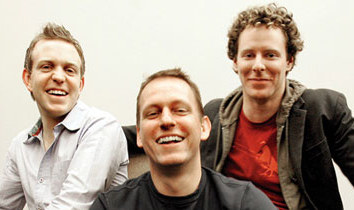 e are far away from their experience and all too easy to associate with other people and dismiss as the "bad choices" lesser people make. Far too easy to move away from to a fantasy island where disease, suffering, old age and bad luck fear to tread and the good times always roll like those long Pacific swells.
Monday, May 16, 2011
Why we need Ron Paul
I rather hope Ron Paul becomes the Republican presidential candidate in the next election. It's true that I agree with some of what he says, some of it quite strongly and it's true that I disagree as well and just as passionately, but if he is Barack Obama's challenger, the nature and tone of the debates and the wider campaign will have to address some fundamental assumptions that always are ignored. One of the many fundamentals that separate the left from the new right is the ranking of rights in our society. Paul asserts what most of his party would rather hide beneath heaps of polemical hyperbole: Property rights are the basis of freedom and being thus fundamental, must not be abridged for the common good.
I'm one of those people, you see, who thinks all ethics, or at least all ethical judgements are situational and that what we like to call fundamentals is an abstract construct, a bit like Euclidean geometry, which is immune from other, perhaps decisive factors. Parallel lines do indeed intersect in a universe with curvature and morally clear decisions become less clear when they have to cope with the purpose of morality and ethics.
Speaking to Chris Matthews last week, Representative Ron Paul (R-TX) declared that he would not have voted for the 1964 Civil Rights Act -- not because he's a racist, and to be sure he says he would have desegregated government institutions like schools, but because the rights of property owners are fundamental to our basic freedoms; freedoms that our constitution implies, are rights inherently and independently fundamental as they stand. Is he insisting that those with no property have fewer or no rights? That's up to him to clarify and I expect he would like the oportunity.
I'm sure Paul would have to admit with liberals, that there are limits to "fundamental" rights, but just what those are and for what reason those limits are put there needs to be dragged out of the cave and into the light. Do rights exist for the benefit of people and if so does the right of one man always trump the right of every man? Are we here for the law or is the law here for us? Do the rights of all really flow from the rights of an individual or are individual rights sometimes an impediment? If there is an impediment to that road to life, liberty and pursuit of happiness, must 300 million of us endure it so that the abstract right of one may be protected? Yes, that's extreme, but as with Newton's laws, it's the extremes that absolutes are shown not to be so. In short, can Libertarian theory produce a country that any of us will want to live in - in whole or in part?
(Of course if I were to debate him, I would, in my quasi-deconstructionist way ask him what he means by property and whether that question isn't more fundamental because without asking that, defending property rights can defend slavery or rape and some slightly worse things.)
We need to talk about it. We've been stuck at this point for too long. These concerns aren't new and they aren't going away and we all need to rethink our opinions at a fundamental level as a regular practice. I think Paul and Obama are both well qualified to do it and will do it -- and if we have to endure another hysterical fugue about flag pins and death panels and birth certificates and Communism aimed at the stupidest elements of the population; lies and slander and tactical statements of opinion that a moment may reverse - - well let's just say that the civil war doesn't need to be fought this way again.
I'm one of those people, you see, who thinks all ethics, or at least all ethical judgements are situational and that what we like to call fundamentals is an abstract construct, a bit like Euclidean geometry, which is immune from other, perhaps decisive factors. Parallel lines do indeed intersect in a universe with curvature and morally clear decisions become less clear when they have to cope with the purpose of morality and ethics.
Speaking to Chris Matthews last week, Representative Ron Paul (R-TX) declared that he would not have voted for the 1964 Civil Rights Act -- not because he's a racist, and to be sure he says he would have desegregated government institutions like schools, but because the rights of property owners are fundamental to our basic freedoms; freedoms that our constitution implies, are rights inherently and independently fundamental as they stand. Is he insisting that those with no property have fewer or no rights? That's up to him to clarify and I expect he would like the oportunity.
“I believe that property rights should be protected,”says the man from Texas. Who would disagree when presented in the abstract. But life isn't an abstract thing and may I defend building a nuclear waste dump next to Manhattan because of that declared axiom? Are property rights part of a constellation of rights all designed by humans to make human life free of certain abuses? Are rights, like Newton's laws, fundamental or descriptive? If they are things invented by the people and for the people, to what purpose were they invented; to protect the one against the many or the many against the one or both? Do they apply equally at all points on the long curve or are only around the middle where we experience things?
I'm sure Paul would have to admit with liberals, that there are limits to "fundamental" rights, but just what those are and for what reason those limits are put there needs to be dragged out of the cave and into the light. Do rights exist for the benefit of people and if so does the right of one man always trump the right of every man? Are we here for the law or is the law here for us? Do the rights of all really flow from the rights of an individual or are individual rights sometimes an impediment? If there is an impediment to that road to life, liberty and pursuit of happiness, must 300 million of us endure it so that the abstract right of one may be protected? Yes, that's extreme, but as with Newton's laws, it's the extremes that absolutes are shown not to be so. In short, can Libertarian theory produce a country that any of us will want to live in - in whole or in part?
(Of course if I were to debate him, I would, in my quasi-deconstructionist way ask him what he means by property and whether that question isn't more fundamental because without asking that, defending property rights can defend slavery or rape and some slightly worse things.)
We need to talk about it. We've been stuck at this point for too long. These concerns aren't new and they aren't going away and we all need to rethink our opinions at a fundamental level as a regular practice. I think Paul and Obama are both well qualified to do it and will do it -- and if we have to endure another hysterical fugue about flag pins and death panels and birth certificates and Communism aimed at the stupidest elements of the population; lies and slander and tactical statements of opinion that a moment may reverse - - well let's just say that the civil war doesn't need to be fought this way again.
Monday, November 08, 2010
Oklahoma is OK
Says the tautological and largely meaningless slogan on their license plates. No, Oklahoma isn't an Apache word for xenophobia, but it may well become an English metaphor, and it certainly isn't OK with regard to having a clue about the consequences of their actions.
Yes, the strict Constitutionalist Nativists of the Southwest would love to be able to pick and choose what part of that document they feel comfortable with and ignore other parts that suggest that Oklahoma cannot set requirements for US citizenship all by itself nor can neighboring Arizona forbid certain kinds of employment to those with an accent that doesn't suggest Aryan "Abstammung," even though they did.
They're apparently also stupid enough to fear that Oklahoma judges will decide to opt out of Federal, State and local law and enforce Sharia, or Islamic law, since so many of them are Islamic fundamentalists in disguise or likely to spontaneously become one. You know, like some people just burst into flames or get abducted by aliens. You really can't trust any judge not to decide to enforce Liechtenstein law or that of France or Andorra, you know, and so they voted for the Save Our State amendment.
It may just work. It may save Oklahoma's free thinkers, Buddhists, Hindus and adherents to Native religions from being beat over the head with selected Jewish laws in the name of being a Christian nation. Sorry Tea folk, when you ban the courts from referencing "laws of another nation" that didn't apply in the first place, you ban the Ten Commandments as well as the other 603 Biblical laws you're not literate enough to know about. Mount Sinai wasn't just outside Muskogee, you know and Israel remains a foreign country.
Just as Sharia is binding only on Muslims, Jewish Mitzvot are only binding on Jews and if any are enforced in the courts, it's coincidental. Muslims have laws against murder and theft too, you know and some of theirs seem more liberal than ours. Sometimes ignorance opens the door to enlightenment.
Of course these landlocked Okies have forgotten that treaties the US Government enters into with foreign entities do have the force of law ( unless those treaties were made with the various Indian tribes without the slightest intention of good faith ) and so refusing to enforce them is unconstitutional and not good for international business, if there is any in Oklahoma.
Just can't win, can ya? So thanks for standing up for the first amendment, cowboy -- maybe you really are OK.
Yes, the strict Constitutionalist Nativists of the Southwest would love to be able to pick and choose what part of that document they feel comfortable with and ignore other parts that suggest that Oklahoma cannot set requirements for US citizenship all by itself nor can neighboring Arizona forbid certain kinds of employment to those with an accent that doesn't suggest Aryan "Abstammung," even though they did.
They're apparently also stupid enough to fear that Oklahoma judges will decide to opt out of Federal, State and local law and enforce Sharia, or Islamic law, since so many of them are Islamic fundamentalists in disguise or likely to spontaneously become one. You know, like some people just burst into flames or get abducted by aliens. You really can't trust any judge not to decide to enforce Liechtenstein law or that of France or Andorra, you know, and so they voted for the Save Our State amendment.
It may just work. It may save Oklahoma's free thinkers, Buddhists, Hindus and adherents to Native religions from being beat over the head with selected Jewish laws in the name of being a Christian nation. Sorry Tea folk, when you ban the courts from referencing "laws of another nation" that didn't apply in the first place, you ban the Ten Commandments as well as the other 603 Biblical laws you're not literate enough to know about. Mount Sinai wasn't just outside Muskogee, you know and Israel remains a foreign country.
Just as Sharia is binding only on Muslims, Jewish Mitzvot are only binding on Jews and if any are enforced in the courts, it's coincidental. Muslims have laws against murder and theft too, you know and some of theirs seem more liberal than ours. Sometimes ignorance opens the door to enlightenment.
Of course these landlocked Okies have forgotten that treaties the US Government enters into with foreign entities do have the force of law ( unless those treaties were made with the various Indian tribes without the slightest intention of good faith ) and so refusing to enforce them is unconstitutional and not good for international business, if there is any in Oklahoma.
Just can't win, can ya? So thanks for standing up for the first amendment, cowboy -- maybe you really are OK.
Friday, June 25, 2010
Ron Paul and my rights
Non pudet, quia pudendum est;
prorsus credibile est, quia ineptum est;
certum est, quia impossibile.*
prorsus credibile est, quia ineptum est;
certum est, quia impossibile.*
I really want to like Ron Paul. There have been times when I felt we needed Ron Paul, even if only to keep the others honest. I concur wholeheartedly with many of his ideas about leaving people alone in their homes and private lives; about transparency in financial matters. I share the loathing of surveillance, of being forced to carry papers. I agree about the wars that are useful only to increase government power over domestic affairs. I agree about the importance of the Bill of Rights that neither Party seems to care much about -- and so on, but I am constantly reminded that I really don't know how he can say what he says, nor can I understand his motivations without postulating entities sufficient to send Occam running down the street screaming.
Two years ago he told us that
"Congress refuses to allow reasonable, environmentally sensitive, offshore drilling."They did, of course allow drilling, but they allowed unreasonable, unsafe and reckless drilling, free of unbiased oversight, which according to Libertarian doctrine should have magically resulted in safe and reasonable results: they allowed the drillers to tell us what was safe enough and what was too expensive to do. They allowed the rig operators to determine what the lives of the workers were worth relative to profits and they allowed them not to give a damn that my grandchildren may never see a clean beach in Florida or eat Gulf shrimp.
It wasn't reasonable, environmentally sensitive drilling that got us into the current mess, now was it? It could have been all that if the laws had been enforced. The blowout might have been prevented if the people in charge of oversight hadn't been on the oil train and had done their jobs; if the regulations themselves hadn't been written by oil men and largely in secret -- if government hadn't been made to look the other way because of a philosophy teaching that government should look the other way. Eleven good men, many of whom saw this coming, would still be alive had we had some very basic oversight -- if we didn't have people insisting that the people who profit write the rules and the people with everything to lose keep silent or be called Communists.
Yet Dr. Paul says it was because of too much government that BP cheated and lied and people died -- that vast tracts of land and sea were destroyed, important industries were ruined, property made worthless -- and old fashioned as it may sound, I think contradictions in logic and fact weaken an argument. Is it a contradiction that oversight in an industry that has the capability of doing unprecedented damage is "too much government" while giving tax breaks and incentives to companies making tens of billions in profits is not?
Yes, it is a contradiction! Are we really so afraid of Communism that we're willing to accept what is by definition, giving state supported irresponsibility to state supported industries while calling it "limited government?" Or is it that the rather insignificant benefit of allowing a foreign corporation to pump American oil and sell it abroad in amounts that really don't matter either in terms of conservation or the price of crude, is a consummation so devoutly to be demanded that risking the end of the world is not worth talking about?
he advises us. But do we need that oil, from there and do we need it so much we'll gamble our country's future on it, people's lives and livelihoods on grabbing a tiny bit more of it. We should be held hostage so that foreign corporations who pay hardly any taxes yet have a bigger vote than you do can add to their already obscene profits: so that they can play while we pay -- and pay forever.
"We still need oil, and a lot of good jobs depend on oil production,"
It's a bad argument, a very, very bad argument, even coming from someone not smart enough to see that -- and Paul certainly is smart enough, so why is adding an insignificant amount to the current supply of oil so desperately important? Why are oil jobs more important than the countless other jobs destroyed by oil spills? Are today's fishing jobs, logging jobs, more important than making sure that there are fish and trees next week? Libertarianism would seem to say so. Libertarianism would seem to promise that passenger pigeons will return now that they were hunted to extinction, that we'd still have the American Bison and the Bald Eagle if we'd been allowed to shoot as many as we liked, but you know -- it's not true.
Look, I don't think I'm channeling Marx when I say that we don't have crime simply because we have too many police, that Enron destroyed lives and fortunes because the Government looked at their books; that people wouldn't rob banks if banks had no guards and robbery weren't illegal. I don't think it's communism to have a government say: no dammit, you can't build a fireworks factory next to that school and if you build it anywhere, you'll install sprinklers and put up no smoking signs, but that's just what people calling themselves libertarians are saying.
I don't understand and I'm quite sure I don't understand because it's not to be understood, it's to be believed. The pieces of the puzzle don't need to fit, the ideas don't need to work. In fact they have a history which proves it so. It's the logic of emotion; the argument from anger and the special pleadings of selfish solipsism: I don't care what happens to my country if oil is a penny a barrel cheaper for two weeks. I don't care if it's a Ponzi scheme because I'm making money. I don't care if I poison the river, my property rights are my property rights. I don't care if your grandmother can't ride my bus -- it's my bus and my right. I don't know if I'm more disturbed by the fact that I don't understand or by the fear that I do understand.
*There is no shame because it is shameful;
it is wholly credible, because it is unsound;
it is certain, because impossible.
(with apologies to Turtullian)
Wednesday, June 16, 2010
Republic of Arizona
"Madness is something rare in individuals- but in groups, parties, peoples, ages it is the rule."
The people who wrote the US constitution never intended to give citizenship to "aliens" says John Kavanagh, a state representative from Arizona. Yes, of course he's a Republican. He apparently has some cryptic powers allowing him to know just what Jefferson and Madison were thinking about allowing folks to become citizens that isn't reflected in the Constitution, or perhaps it's just another line of Republican bullshit, seeing as we didn't have the kind of immigration laws in the mid 18th century we instituted in the early 20th century. The fact is that the constitution, for from being anti-alien, doesn't really mention immigration requirements or quotas at all.
I don't think Alexander Hamilton, for instance, had to get a green card to become our first Secretary of the Treasury, a bona fide Founding Father, signer of the Constitution, economist, and political philosopher; Aide-de-camp to General George Washington during the Revolutionary War and a leader of nationalist forces calling for a new Constitution. He was a Caribbean immigrant, you know and illegitimate to boot. He just came here for an education, liked the place and stayed and prospered, as so many modern illegals do.
Kavanaugh says the proposed Arizona law denying citizenship to children born here to parents with expired or non existent visas isn't unconstitutional. He's wrong, of course, but whether it is or isn't, the establishment of requirements for citizenship, or for legal presence in the US is a power not granted to Arizona, to establish or to enforce. Article 1, Section 8 reserves the power To establish an uniform Rule of Naturalization, to the Congress of the United States alone and that one would think, should be that.
Like many politicians, Kavanaugh is good at answering a question that wasn't asked and pretending to have won the contest. Like many self-styled Libertarians, he talks about the constitution and the rule of law a lot, but what he and his ilk seem to want is the power to do as they please to anyone they please without paying any attention to that much abused and often inconvenient document or the nation for which it stands.
Is Libertarianism one of those things, like Christianity and altruism and "pure" capitalism, that are wonderful to contemplate, but don't exist or can't exist in practice? Perhaps some day I'll find one that isn't just using the pose to advance some private motives. Perhaps not.
-Nietzsche-
The people who wrote the US constitution never intended to give citizenship to "aliens" says John Kavanagh, a state representative from Arizona. Yes, of course he's a Republican. He apparently has some cryptic powers allowing him to know just what Jefferson and Madison were thinking about allowing folks to become citizens that isn't reflected in the Constitution, or perhaps it's just another line of Republican bullshit, seeing as we didn't have the kind of immigration laws in the mid 18th century we instituted in the early 20th century. The fact is that the constitution, for from being anti-alien, doesn't really mention immigration requirements or quotas at all.
I don't think Alexander Hamilton, for instance, had to get a green card to become our first Secretary of the Treasury, a bona fide Founding Father, signer of the Constitution, economist, and political philosopher; Aide-de-camp to General George Washington during the Revolutionary War and a leader of nationalist forces calling for a new Constitution. He was a Caribbean immigrant, you know and illegitimate to boot. He just came here for an education, liked the place and stayed and prospered, as so many modern illegals do.
Kavanaugh says the proposed Arizona law denying citizenship to children born here to parents with expired or non existent visas isn't unconstitutional. He's wrong, of course, but whether it is or isn't, the establishment of requirements for citizenship, or for legal presence in the US is a power not granted to Arizona, to establish or to enforce. Article 1, Section 8 reserves the power To establish an uniform Rule of Naturalization, to the Congress of the United States alone and that one would think, should be that.
Like many politicians, Kavanaugh is good at answering a question that wasn't asked and pretending to have won the contest. Like many self-styled Libertarians, he talks about the constitution and the rule of law a lot, but what he and his ilk seem to want is the power to do as they please to anyone they please without paying any attention to that much abused and often inconvenient document or the nation for which it stands.
Is Libertarianism one of those things, like Christianity and altruism and "pure" capitalism, that are wonderful to contemplate, but don't exist or can't exist in practice? Perhaps some day I'll find one that isn't just using the pose to advance some private motives. Perhaps not.
Thursday, May 20, 2010
The will of the WASP
Rand Paul is not Ron Paul and I'm not flattering him by saying it. There is a difference between principle and bull-headed intransigence and Paul the younger seems as unclear about that as he is not quite up to the task of successfully debating Rachel Maddow about his distaste for the Civil Rights Act of 1964. Asked whether he thought a restaurant had the right to refuse service to black customers, Paul commenced a rather evasive dance around the subject by trying to describe regulation as ownership.
Is the government of and by the people allowed,as the founding documents imply, to promote liberty for all, to promote peace and domestic tranquility by imposing limitations on individual behavior? Is he arguing for a government so impotent it must inevitably fall into feudalism and exploitation? Those are the questions he begs and the questions he avoids. Sorry Doctor, I think the balance between individual liberty and being a free country is a practical and necessary discussion.
Is it practical to have a society so far beyond the control of its members that justice becomes only a matter of the will of the strongest and the richest and most well connected -- the will of the WASP? No, unlimited individual license does not allow for a society at all, much less a free one.
Still it's all about the practical as opposed to the relentlessly repeated and self referential principle and we've all heard of or can easily come up with examples where freedom cannot be unlimited for many reasons; where behavior that needs to be restrained cannot be restrained by anyone other than Government. Is it preferable to allow my neighbors to forbid Baptists to live on my block and ignore my freedom or is it better to protect the minority against the majority, which is a common definition of democracy as distinguished from mob rule. No, if this is but a "philosophical" discussion it's because he doesn't want to address the inevitable questions Libertarians invite when they refuse to discuss its inherent limitations.
The traditional 'best government is least government' trope reduces to absurdity all by itself as quickly as does his argument that any restraints or obligations put on behavior or business practices constitute ownership and are an unnecessary stain on the pure and absolute freedom we've somehow decided is our birthright. Certainly although he assures us that he would never patronize a business that discriminates, he realizes that his sentiments are not universal. He realizes that he's giving license to anyone to debase any group he likes and to diminish their lives, their liberty and their pursuit of happiness. He realizes that such a nation as he dreams of would be fractured, Balkanized, a loose, weak, unstable confederation of hostile groups no more pleasant than a baboon troupe and with each of us at his neighbor's throat. He must realize that he's appealing to bigots, racists and sociopaths of no conscience -- and all in the name of principle and freedom.
So why is he debating as though the balance between too much and not enough wasn't worth discussing? As though that wasn't the real question? Perhaps its because he's pandering to an audience somewhat less rational than Ron Paul's: to an audience whipped into irrational fury by the basic requirements of civilization; too hungry for revenge against a maturing world and too angry and self centered to give a damn what he can do for his country.
"What about freedom of speech?" asked the less than candid Candidate. "Well what it gets into then is if you decide that restaurants are publicly owned and not privately owned, then do you say that you should have the right to bring your gun into a restaurant even though the owner of the restaurant says 'well no, we don't want to have guns in here' the bar says 'we don't want to have guns in here because people might drink and start fighting and shoot each-other?'" Paul replied. "Does the owner of the restaurant own his restaurant? Or does the government own his restaurant? These are important philosophical debates but not a very practical discussion."Unfortunately, more than just being grammatically confused, he's wrong. He's equivocating and the debate is, of course, entirely about practical matters. Can we agree, for instance, that being black in a restaurant is fundamentally different than carrying a gun in a bar and if so, his analogy is defective and a fallacy of distraction? Certainly a speed limit is not Government ownership of my car, health regulations imposed on food producers aren't the equivalent of owning the family farm nor is forcing Woolworth to stop creating two Americas with their policies isn't Marxism.
Is the government of and by the people allowed,as the founding documents imply, to promote liberty for all, to promote peace and domestic tranquility by imposing limitations on individual behavior? Is he arguing for a government so impotent it must inevitably fall into feudalism and exploitation? Those are the questions he begs and the questions he avoids. Sorry Doctor, I think the balance between individual liberty and being a free country is a practical and necessary discussion.
Is it practical to have a society so far beyond the control of its members that justice becomes only a matter of the will of the strongest and the richest and most well connected -- the will of the WASP? No, unlimited individual license does not allow for a society at all, much less a free one.
Still it's all about the practical as opposed to the relentlessly repeated and self referential principle and we've all heard of or can easily come up with examples where freedom cannot be unlimited for many reasons; where behavior that needs to be restrained cannot be restrained by anyone other than Government. Is it preferable to allow my neighbors to forbid Baptists to live on my block and ignore my freedom or is it better to protect the minority against the majority, which is a common definition of democracy as distinguished from mob rule. No, if this is but a "philosophical" discussion it's because he doesn't want to address the inevitable questions Libertarians invite when they refuse to discuss its inherent limitations.
The traditional 'best government is least government' trope reduces to absurdity all by itself as quickly as does his argument that any restraints or obligations put on behavior or business practices constitute ownership and are an unnecessary stain on the pure and absolute freedom we've somehow decided is our birthright. Certainly although he assures us that he would never patronize a business that discriminates, he realizes that his sentiments are not universal. He realizes that he's giving license to anyone to debase any group he likes and to diminish their lives, their liberty and their pursuit of happiness. He realizes that such a nation as he dreams of would be fractured, Balkanized, a loose, weak, unstable confederation of hostile groups no more pleasant than a baboon troupe and with each of us at his neighbor's throat. He must realize that he's appealing to bigots, racists and sociopaths of no conscience -- and all in the name of principle and freedom.
So why is he debating as though the balance between too much and not enough wasn't worth discussing? As though that wasn't the real question? Perhaps its because he's pandering to an audience somewhat less rational than Ron Paul's: to an audience whipped into irrational fury by the basic requirements of civilization; too hungry for revenge against a maturing world and too angry and self centered to give a damn what he can do for his country.
Wednesday, April 28, 2010
Drop that Chalupa, Pedro
When those cold war movies I grew up on wanted to let you know the scene was not in the land of the free, we were furnished with Angst ridden scenes where the protagonist was asked for his papers by someone in a leather trench coat on some dark street corner. Maybe his accent was showing, the cut of his clothes -- maybe it was just routine, but we were all grateful that back here, in "freedom" we could go about our business without worry and the government was on our side.
The strangest thing about Arizona's new knee jerk immigration law is that Arizona is the spiritual home of small-government libertarianism and the feeling that Government is a necessary evil; perhaps more evil than necessary. They don't want the government telling them when and where or if they can keep and bear and conceal weapons, what they can eat, smoke or drink or what they can do on their property. They don't trust public education or public radio and they sure as hell don't want to pay for them. I suspect they'd raise holy hell if the police were to stop them at random looking for contraband or illegal weapons or even a drivers license, yet they're apparently quite happy to demand that anyone "suspicious" in that state must keep proof of citizenship on their person at all times, display such proof to any cop that feels like demanding it, or face serious consequences. Of course, if you're white, you're probably all right, so never mind.
To any unbiased observer this alone would more than hint of a police state and unconstitutional government interference in private life.
Sure, if the Arizona police were perfect human beings there would be little concern, but they're far from that. Still, those self-styled Libertarians seem quite happy to give unprecedented and perhaps unconstitutional power to Law enforcement to stop people and demand papers. It's pretty hard to maintain the pose of strict constitutional limits on government when the power reserved for the judicial branch is given to a cop on the beat. The various issues surrounding protecting citizens from government powers of search and seizure were a cornerstone of our rebellion against British rule -- as I shouldn't have to remind anyone.
Dare I speculate that the Libertarian label might, for a great many people, sometimes be only the phony ID that authoritarianism carries?
Evidently fear of aliens overrides high principle and what Arizona really wants is a government that cuts a swath through the law to root out what they want rooted out -- and the Constitution be damned. What they want is a government that lays it's fingers heavily on people they don't like and lays completely off anything that stands between them and whatever they please. Sorry cowboy; when you add in the racist element, this situational Libertarianism is too much like Fascism to make it worth trying to find a difference.
The strangest thing about Arizona's new knee jerk immigration law is that Arizona is the spiritual home of small-government libertarianism and the feeling that Government is a necessary evil; perhaps more evil than necessary. They don't want the government telling them when and where or if they can keep and bear and conceal weapons, what they can eat, smoke or drink or what they can do on their property. They don't trust public education or public radio and they sure as hell don't want to pay for them. I suspect they'd raise holy hell if the police were to stop them at random looking for contraband or illegal weapons or even a drivers license, yet they're apparently quite happy to demand that anyone "suspicious" in that state must keep proof of citizenship on their person at all times, display such proof to any cop that feels like demanding it, or face serious consequences. Of course, if you're white, you're probably all right, so never mind.
To any unbiased observer this alone would more than hint of a police state and unconstitutional government interference in private life.
Sure, if the Arizona police were perfect human beings there would be little concern, but they're far from that. Still, those self-styled Libertarians seem quite happy to give unprecedented and perhaps unconstitutional power to Law enforcement to stop people and demand papers. It's pretty hard to maintain the pose of strict constitutional limits on government when the power reserved for the judicial branch is given to a cop on the beat. The various issues surrounding protecting citizens from government powers of search and seizure were a cornerstone of our rebellion against British rule -- as I shouldn't have to remind anyone.
Dare I speculate that the Libertarian label might, for a great many people, sometimes be only the phony ID that authoritarianism carries?
Evidently fear of aliens overrides high principle and what Arizona really wants is a government that cuts a swath through the law to root out what they want rooted out -- and the Constitution be damned. What they want is a government that lays it's fingers heavily on people they don't like and lays completely off anything that stands between them and whatever they please. Sorry cowboy; when you add in the racist element, this situational Libertarianism is too much like Fascism to make it worth trying to find a difference.
Wednesday, April 07, 2010
Internet neutrality and the Courts
Marconi was still a young man when the need for government control of communications became all too obvious. Newsmen using the new wireless telegraph began to jam each others' transmissions accidentally and on purpose and battles were fought over frequency allocations. Someone had to step in with some rules to allow the technology to develop, to prevent it being used as a weapon in restraint of free trade and to make sure that those using the public airwaves would use it without disregard for the public interest.
I can almost hear throats clearing at those last two words, almost see lips forming words like collectivism, socialism, Communism, but without it, the guy with the most money has the podium and the guy who owns all the podiums: press, broadcast and now the Internet, might just as well be the government with all that power. The difference between a fair trial and murder; between a Hockey game and a viking raid (if there is a difference) is the rules, so save your breath. I don't want to hear it.
The FCC was formed for these reasons, but during the last administration, it's been almost exclusively concerned with promoting the interests of power companies who want to use the power lines to get into the internet business, and sometimes to the serious harm of other users of the frequency spectrum. Whether or not this has changed under the Communist/Fascist Antichrist from Kenya seems to matter less than the current posture of the courts. The District of Columbia Federal Appeals Court decided yesterday in favor of Comcast and against the authority of the FCC in it's attempt to mandate "net neutrality."
The new administration has been in favor of equal treatment for all internet users; in favor of a policy that would prevent Comcast, for instance from slowing down and restricting the content they don't like and making content they approve of faster and cheaper. Yes, yes, I know all about free market competition, but I'm talking about the real world here and that's a world where corporations collude rather than compete. It's a world where a small group can control information to the point where no one can compete successfully. As I said, the difference between boxing and assault and battery or even murder is the rules.
It's too soon to make scary assertions about how this will work out, but as restrictions on how much of all media outlets can be owned by one person, real or corporate have been loosened along with restrictions on how much information they can restrict in their own interest, it looks to me like we're once again shooting ourselves in the foot, slow motion style. Our obsessive fantasy of a 'no holds barred' marketplace leading to peace and order, prosperity and a well informed electorate is, along with our phobic horror of phrases like "public interest" may be making corporate demagoguery a more valid vision of the future.
I can almost hear throats clearing at those last two words, almost see lips forming words like collectivism, socialism, Communism, but without it, the guy with the most money has the podium and the guy who owns all the podiums: press, broadcast and now the Internet, might just as well be the government with all that power. The difference between a fair trial and murder; between a Hockey game and a viking raid (if there is a difference) is the rules, so save your breath. I don't want to hear it.
The FCC was formed for these reasons, but during the last administration, it's been almost exclusively concerned with promoting the interests of power companies who want to use the power lines to get into the internet business, and sometimes to the serious harm of other users of the frequency spectrum. Whether or not this has changed under the Communist/Fascist Antichrist from Kenya seems to matter less than the current posture of the courts. The District of Columbia Federal Appeals Court decided yesterday in favor of Comcast and against the authority of the FCC in it's attempt to mandate "net neutrality."
The new administration has been in favor of equal treatment for all internet users; in favor of a policy that would prevent Comcast, for instance from slowing down and restricting the content they don't like and making content they approve of faster and cheaper. Yes, yes, I know all about free market competition, but I'm talking about the real world here and that's a world where corporations collude rather than compete. It's a world where a small group can control information to the point where no one can compete successfully. As I said, the difference between boxing and assault and battery or even murder is the rules.
It's too soon to make scary assertions about how this will work out, but as restrictions on how much of all media outlets can be owned by one person, real or corporate have been loosened along with restrictions on how much information they can restrict in their own interest, it looks to me like we're once again shooting ourselves in the foot, slow motion style. Our obsessive fantasy of a 'no holds barred' marketplace leading to peace and order, prosperity and a well informed electorate is, along with our phobic horror of phrases like "public interest" may be making corporate demagoguery a more valid vision of the future.
Subscribe to:
Posts (Atom)